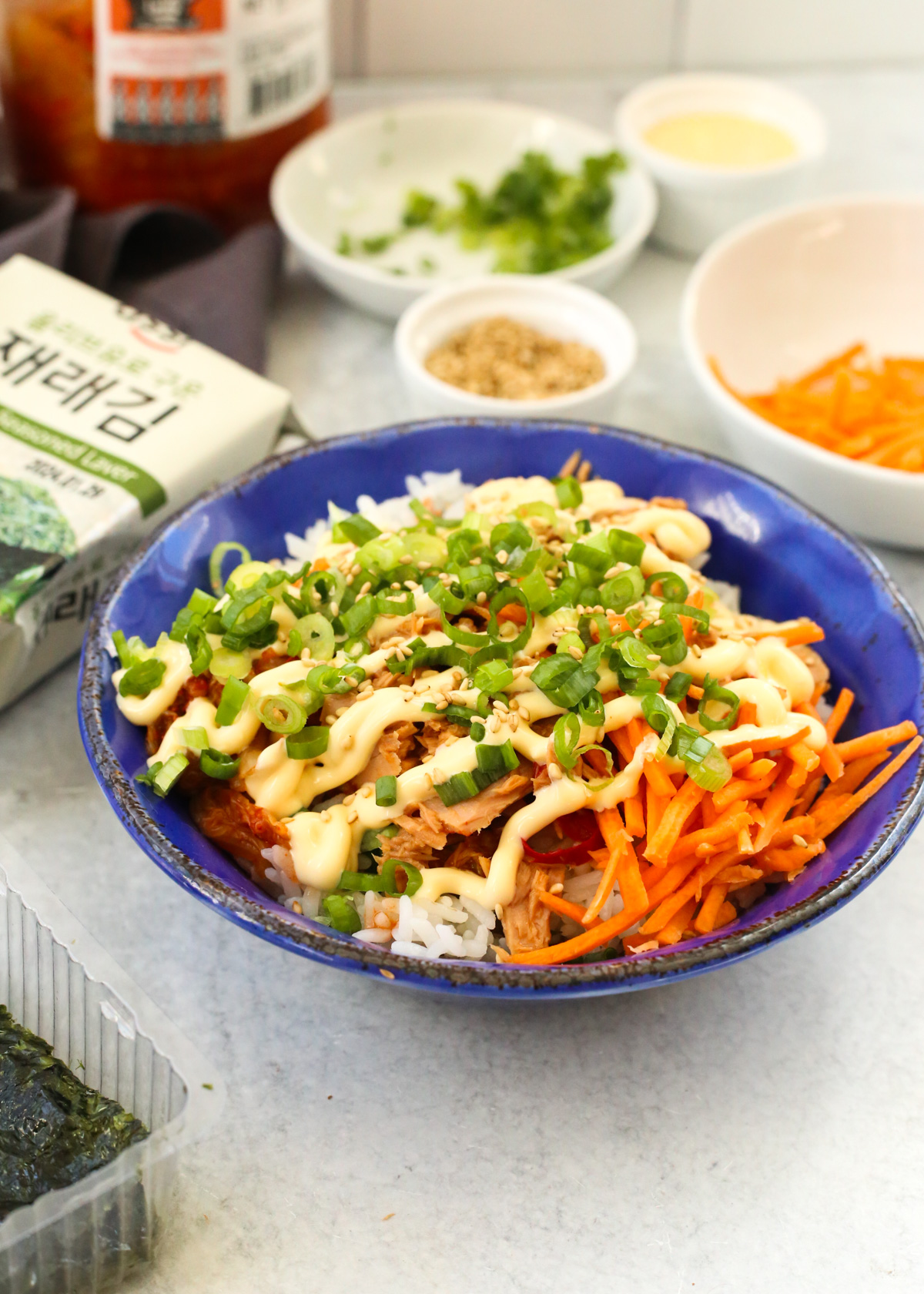
Why You’ll Love This Korean Tuna Rice Bowl Recipe
- You only need a few simple ingredients to build strong flavor. This bowl has it all with carbs, protein, fat, and a variety of textures and colors.
- It’s incredibly easy to make, but also easy to customize. Keep scrolling for a few suggestions for different ways to build a rice bowl.
- You can enjoy Korean comfort food in your own kitchen. In fact, most Korean restaurants don’t even have this on the menu because it’s so easy to make yourself!
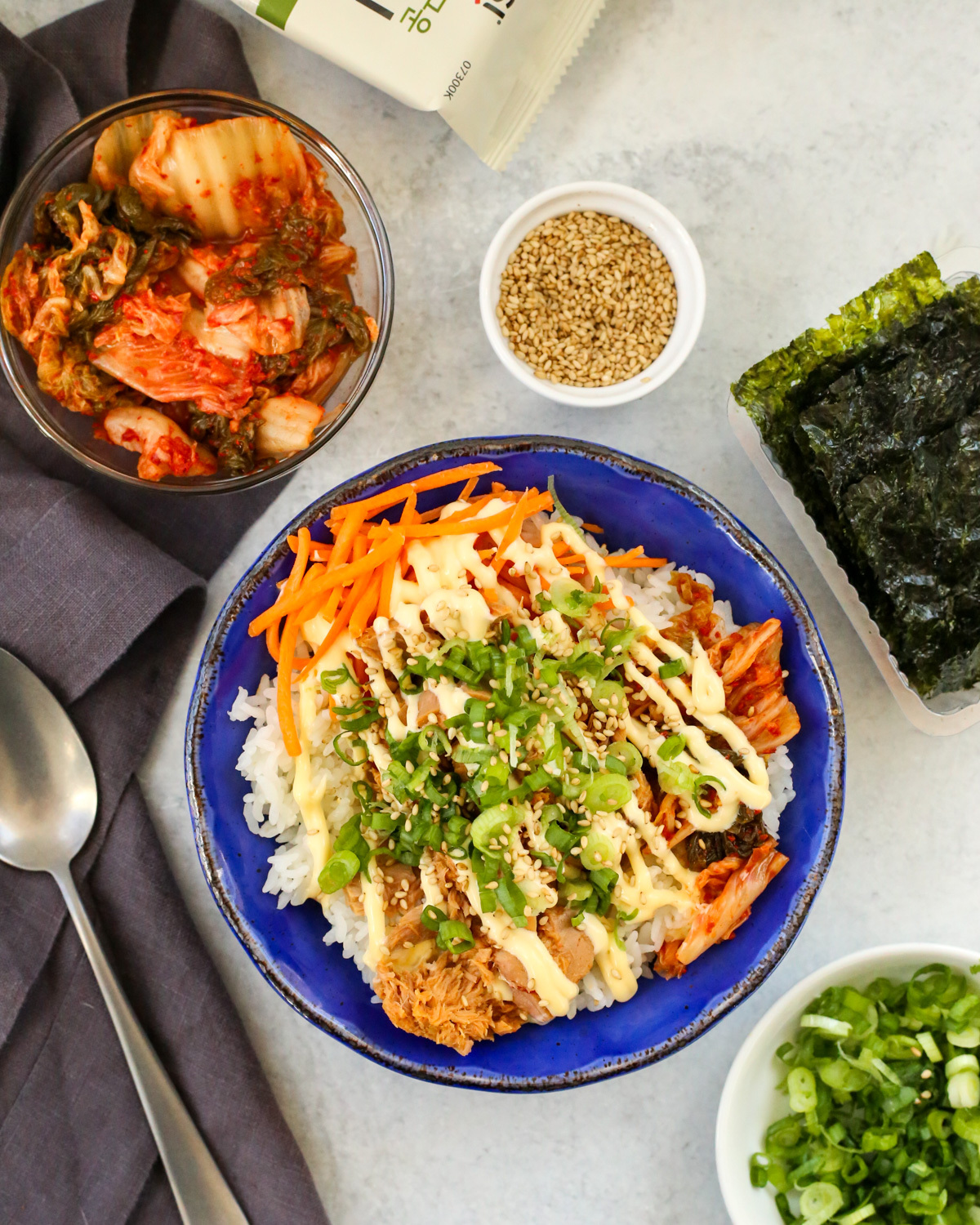
What is Chamchi Deopbap?
In Korean, chamchi means tuna and deopbap means “over rice”. It’s a simple meal consisting of warm rice, canned tuna, kewpie mayo, and various vegetables and other toppings. It’s one of those meals that’s perfect when you don’t feel like cooking.
Technically, you could also call this recipe chamchi mayo deopbap, Korean tuna mayo deopbap, or Korean tuna mayo rice bowl and all would be more or less accurate and correct.
You can also think of is as a template with options to add other ingredients (more on that below).
Technically, you could also call this recipe chamchi mayo deopbap, Korean tuna mayo deopbap, or Korean tuna mayo rice bowl and all would be more or less accurate and correct.
You can also think of is as a template with options to add other ingredients (more on that below).
Korean Tuna Rice Bowl Ingredients
- Cooked rice. I always use a short grain or medium grain rice, like this Kokuho Rose brand. But nearly any type of rice can work, including sushi rice, jasmine rice, long-grain rice, or even instant or microwave rice.
- Canned tuna. Again, use what you have available but if you can get to a Korean grocery store, I really recommend trying Korean canned tuna. The first time I tried it I immediately noticed a difference. The flakes are bigger and chunkier, plus it comes in a wider variety of flavors such as this one packed in kimchi juice.
- Kewpie mayo. This Japanese-style mayo is made with egg yolks and MSG (monosodium glutamate). It’s extra rich and creamy, and helps moisten the flakes of tuna when it’s all mixed together. I much prefer this over regular mayonnaise but if that’s all you have, it works just fine.
- Kimchi, cut or sliced into bite-sized pieces
- Chopped veggies such as the matchstick carrots I used (optional, but I like the fresh crunch it adds)
- Green onions
- Toasted sesame seeds
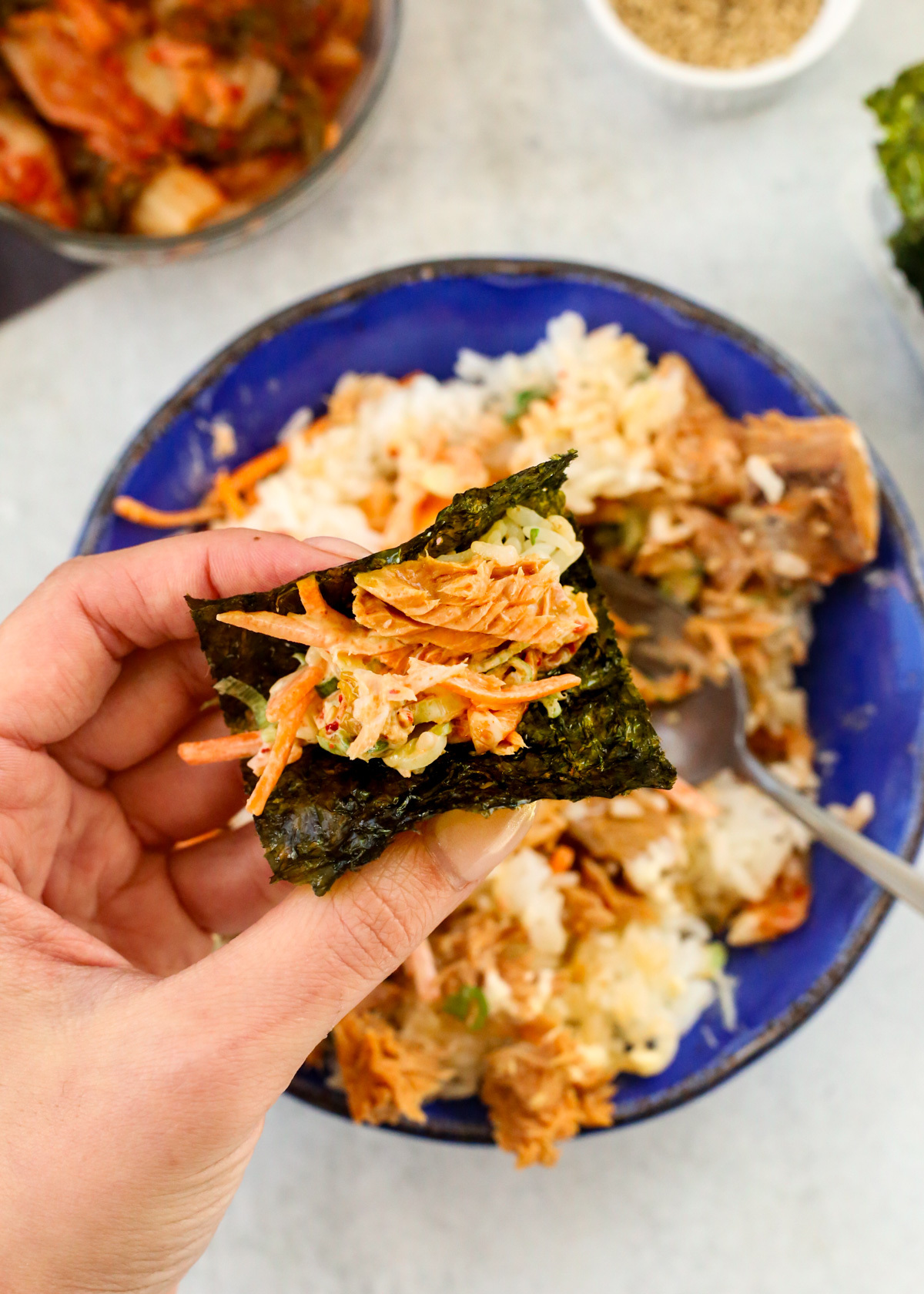
- Gim/nori (dried and roasted sheets of seaweed) for serving
Street Smart Nutrition Tip: If you plan to make this or any other Korean recipe often, stock up on all the key ingredients! Get my list of the Top 10 Korean Pantry Essentials HERE.
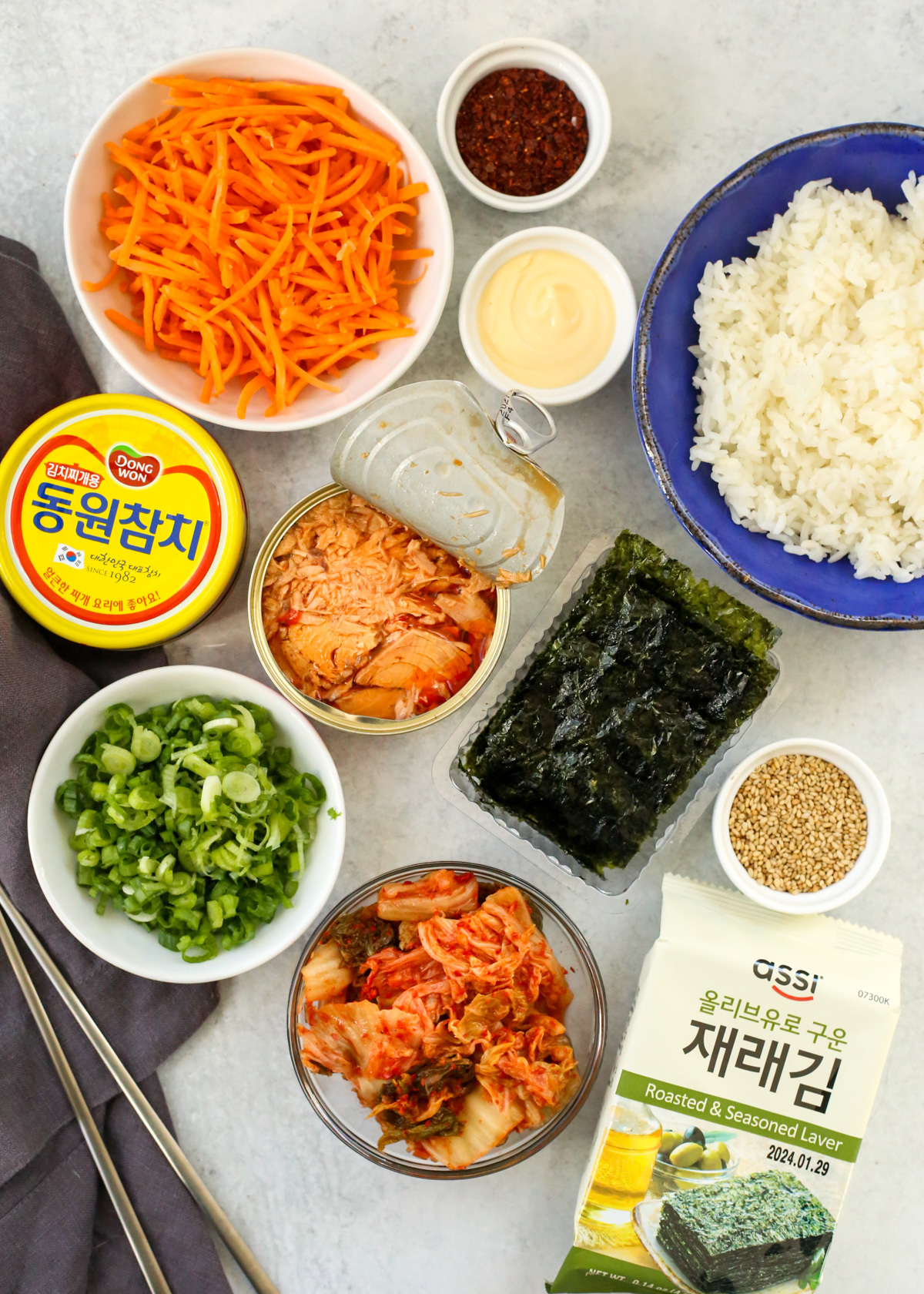
Note that you’ll be able to find most of these ingredients in your local grocery store. You may even find them with grocery delivery by using Instacart
But I also included affiliate links to help you find specific things I use when I make chamchi deopbap (Korean tuna rice bowl). It will likely be more expensive to order online, but it can be an option if you don’t have a Korean market where you live.
But I also included affiliate links to help you find specific things I use when I make chamchi deopbap (Korean tuna rice bowl). It will likely be more expensive to order online, but it can be an option if you don’t have a Korean market where you live.
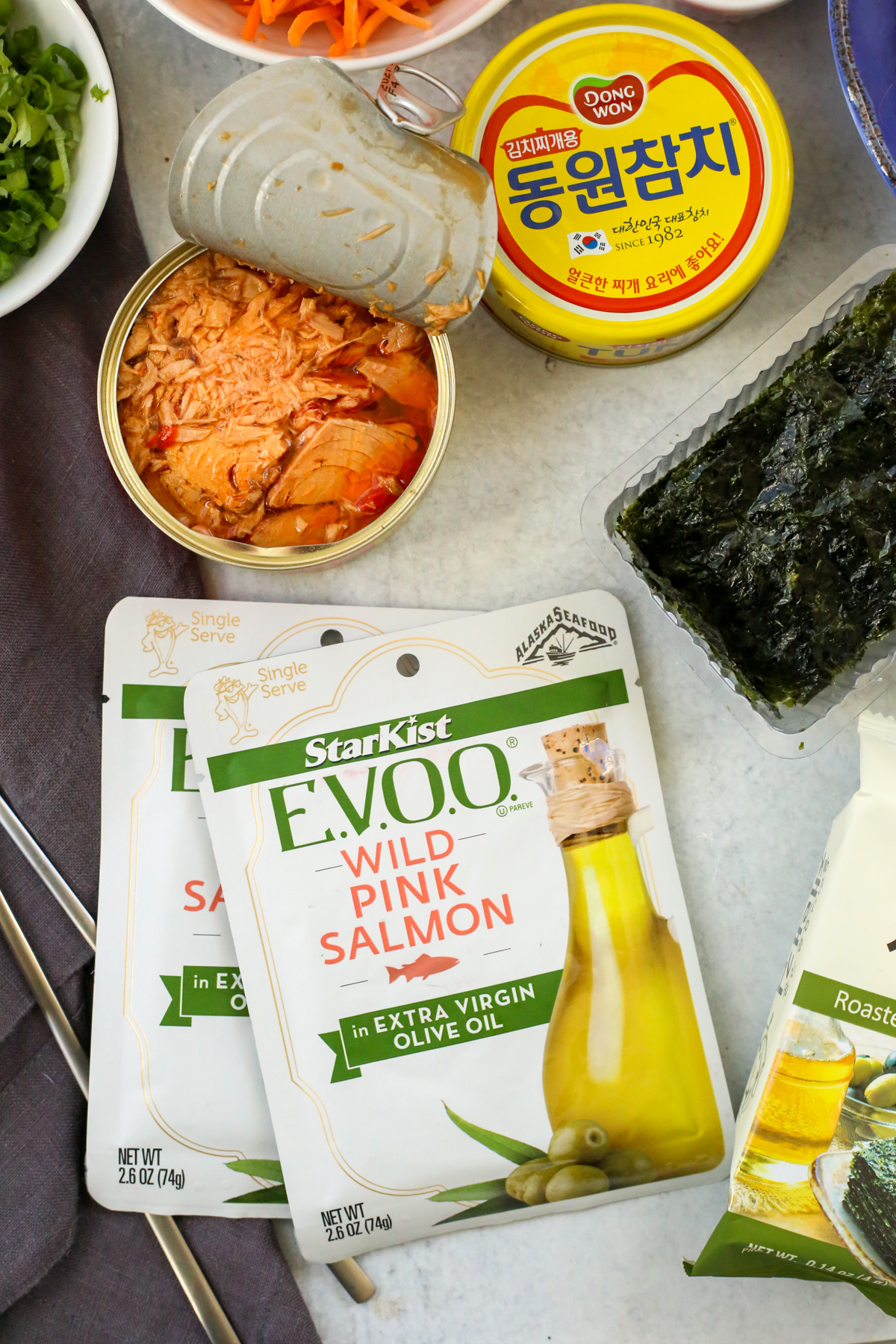
And if you’re on board with everything else but want an alternative to tuna, these Stark are the next best thing! They’re packed in olive oil so the texture is never dry, and no draining required. This can make it even easier to make a no-mess, low effort lunch.
How to Make a Korean Tuna Rice Bowl
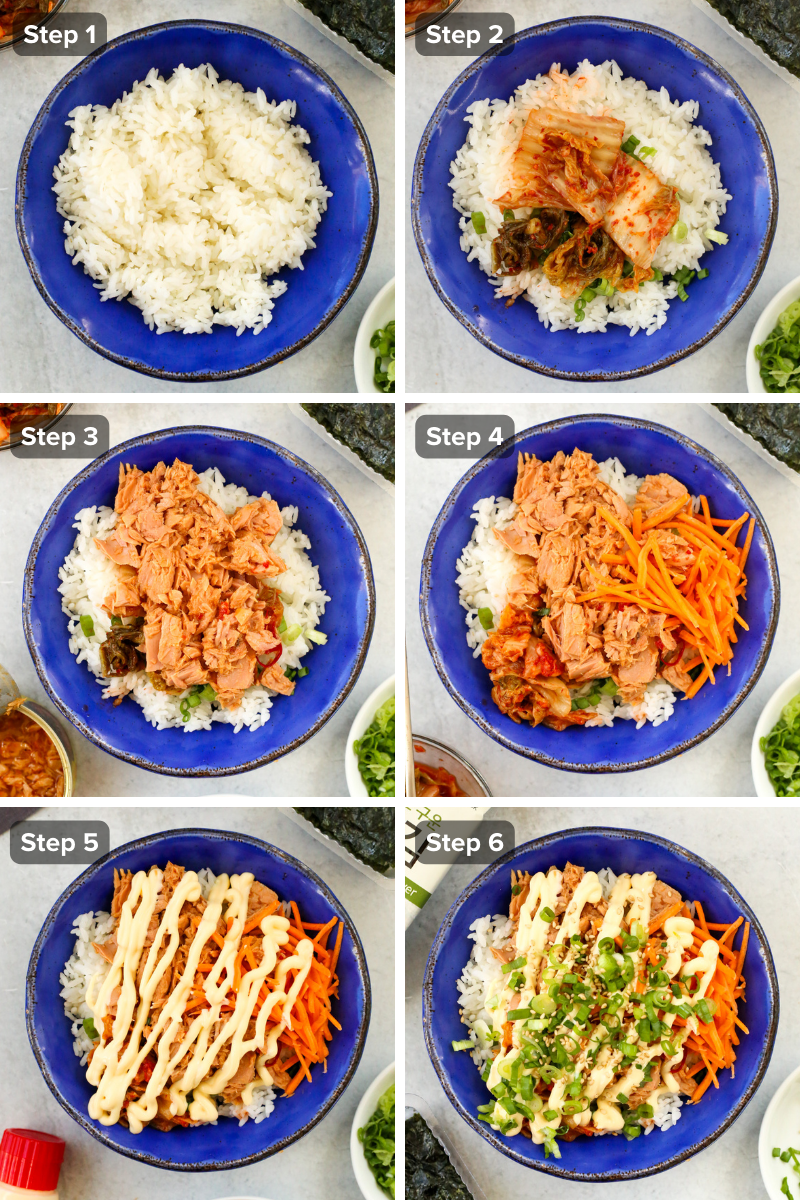
This easy meal could not be easier to build. Follow these simple steps:
- Reheat your pre-cooked rice and layer it into the bottom of a small bowl. You’re making a single portion, so it can be a regular bowl, not a mixing bowl. If you’re making fresh steamed rice, adjust the cooking time accordingly, but you can reheat rice in the microwave in a couple of minutes or less.
- Use kitchen shears to cut kimchi into bite-sized pieces (as needed). Layer this on top of the rice so it starts to warm up from the heat of the rice.
- Next, open the can of tuna. You want to drain most or all of the liquid off so you don’t end up with soggy rice. Flake it apart and add that on top of the kimchi.
- Add your other veggies, including extra kimchi, and anything else you plan to use. I recommend matchstick carrots (shown here), pickled onions, or something similar that will complement the other flavors and textures.
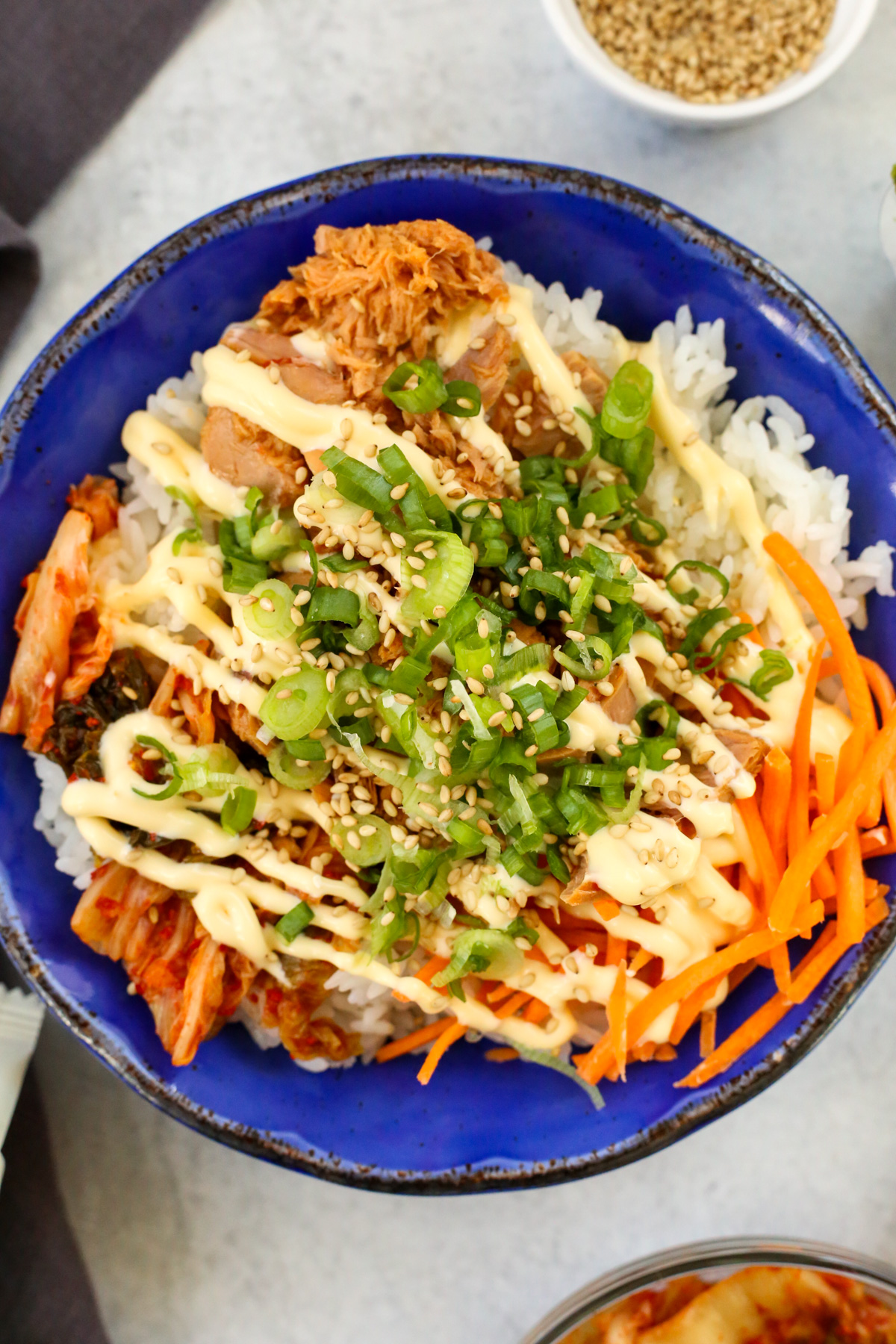
- Drizzle the kewpie mayo over the top. It doesn’t have to look picture-perfect! And if you like more of a spicy kick, you can mix a little bit of gochujang with the mayo before adding it.
- Finally, garnish with plenty of sliced green onions and toasted sesame seeds. Grab a package of gim or nori (dried and roasted sheets of seaweed) for serving. Enjoy!
Street Smart Nutrition Tip: If you want to avoid dragging out a knife and cutting board, or just want to minimize cleanup, use kitchen shears to cut the green onions. It won’t be as uniform, but it easily gets the job done if you’re prepping this tuna rice bowl in a hurry.
Tuna Rice Bowl Swaps and Substitutions
As I mentioned, this meal is super easy to customize. Since deopbap means “over rice” you can add pretty much anything to a base of cooked rice. Here are a few suggestions:
There’s truly no “wrong” way to make chamchi deopbap (Korean tuna rice bowl). Just let your taste buds be your guide! I provide some estimated measurements in the recipe card below.
- Top with scrambled eggs or a fried egg for added protein. Or try canned salmon, shredded rotisserie chicken, or any other protein you have on hand.
- Switch to brown rice if you’re partial to that variety.
- Add a drizzle of sesame oil, soy sauce, or scoop of gochujang (Korean red pepper paste) to mix into your bowl. Korean food features these ingredients often, so there’s absolutely no reason you can’t doctor it up when you make your version at home!
- And no Korean meal is complete without a few small side dishes for the table (banchan). Try Oi Muchim (seasoned cucumber salad) or various types of kimchi.
There’s truly no “wrong” way to make chamchi deopbap (Korean tuna rice bowl). Just let your taste buds be your guide! I provide some estimated measurements in the recipe card below.
But just know this is a very forgiving, simple recipe that doesn’t require exact measurements. If you don’t love how it turns out, just make a few adjustments the next time you try it. Eventually you’ll land on the version that feels just right for you!
Tuna Rice Bowl Storage Tips
As written, this recipe assumes you’ll split a large can of tuna between two servings.
This can be great if you’re eating at home and have someone to share with, but if not, you’ll have a whole ‘nother portion ready to go. I personally think chamchi deopbap tastes best on the first go-round, but I can’t deny how convenient it is to have one that’s literally ready to eat.
Cover or seal in an airtight container. You can store it in the fridge for a few days. And remember, the texture of the rice is best when reheated, so use the microwave to heat in short increments until it’s warmed through.
This can be great if you’re eating at home and have someone to share with, but if not, you’ll have a whole ‘nother portion ready to go. I personally think chamchi deopbap tastes best on the first go-round, but I can’t deny how convenient it is to have one that’s literally ready to eat.
Cover or seal in an airtight container. You can store it in the fridge for a few days. And remember, the texture of the rice is best when reheated, so use the microwave to heat in short increments until it’s warmed through.
Equipment
- Can Opener
- kitchen shears
Ingredients
- 2 cups white rice, cooked or reheated
- 1 can tuna, packed in oil or seasoned, drained
- 1/2 cup napa cabbage kimchi, approximately
- 1/2 cup matchstick carrots, approximately
- 2-3 tbsp kewpie mayo, approximately
- 2 green onions, thinly sliced
- 1/2 tbsp toasted sesame seeds
- 2 packages gim or nori snack sheets
Instructions
- Reheat the pre-cooked rice for two minutes in the microwave (or until warmed through) and divide between two serving bowls.
- Use kitchen shears to cut kimchi into bite-sized pieces (as needed). Layer this on top of the rice in each bowl so it starts to warm up from the heat of the rice. Adjust the amount according to your taste preferences.
- Next, open the can of tuna. Drain most or all of the liquid off to avoid soggy rice, then flake it apart and divide between each bowl.
- Add the carrots and any additional kimchi you want to use. Drizzle the kewpie mayo over the top.
- Finally, garnish with plenty of sliced green onions and toasted sesame seeds. Grab a package of gim or nori (dried and roasted sheets of seaweed) for serving. Enjoy!
Notes
Store leftovers in an airtight container. Refrigerate up to 3 days and reheat in the microwave before serving.
