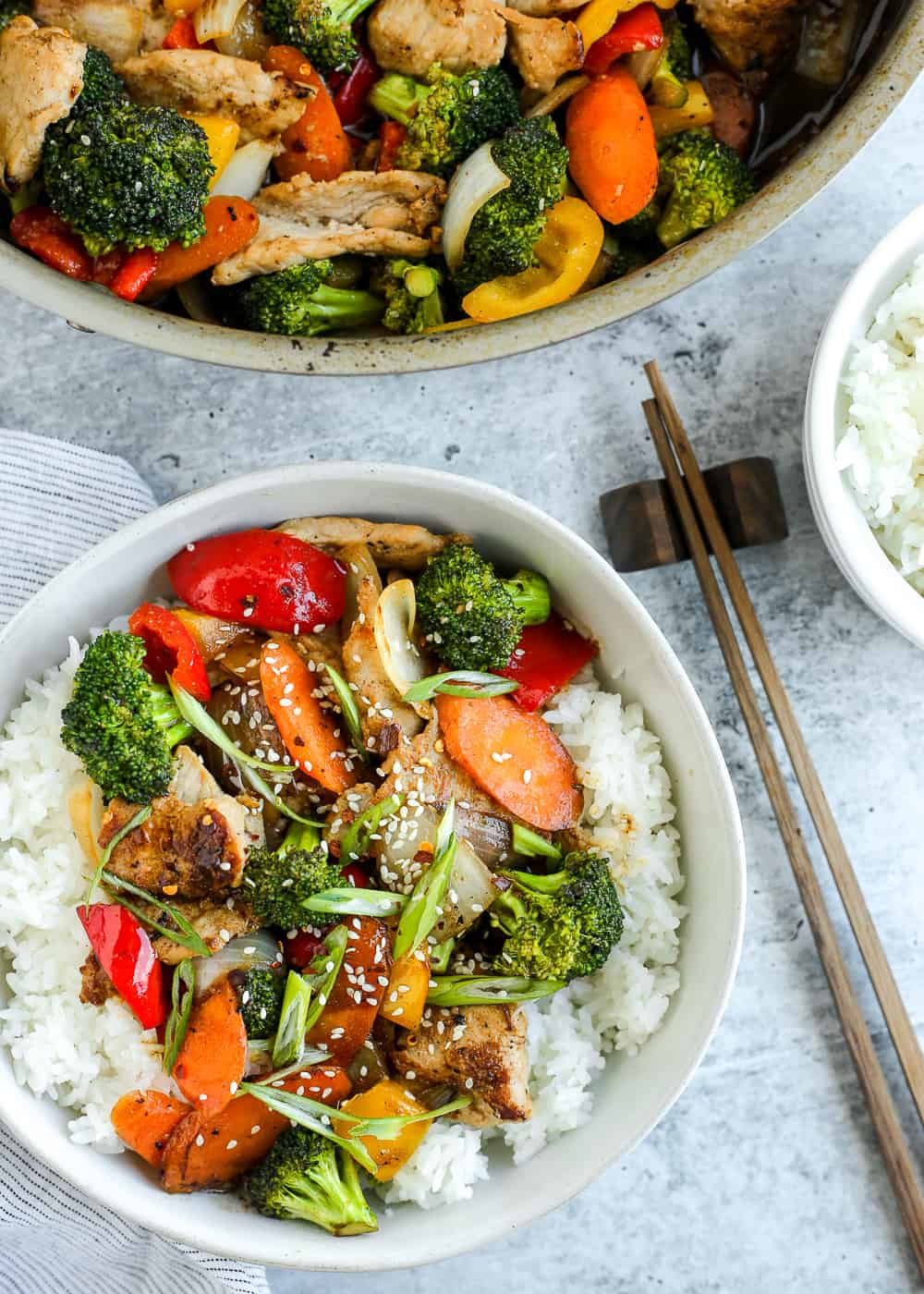
Sweet Miso Pork Stir Fry
Pork tenderloin is an extra-lean cut of pork. In fact, it’s as lean as a skinless chicken breast! To learn more about pork nutrition for pork tenderloin and other common cuts, check out this chart from the National Pork Board.
Street Smart Nutrition Tip: It’s a myth that lean or extra-lean cuts are flavorless or bland. Cooking methods like marinating can infuse deep flavor from the start of cooking.
Typically, pork tenderloins are seared on the grill or on the stove, then baked or roasted. But they’re such a versatile cut of pork, you don’t have to stay limited to just those options!
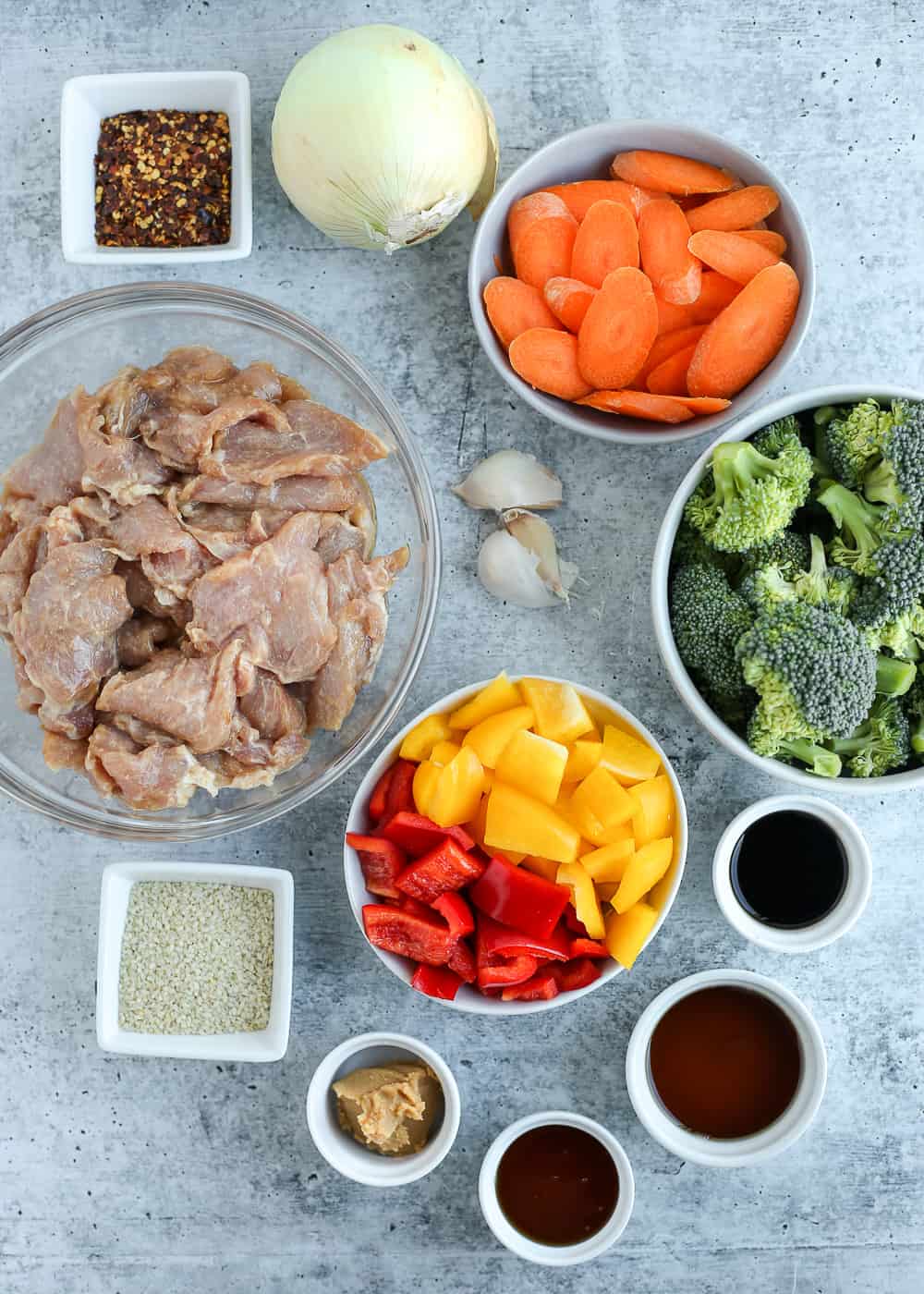
Here’s what you’ll need for this pork tenderloin stir fry recipe.
Ingredients: A large pork tenderloin (about 1-1 1/4 pounds to make four to six servings), a head of broccoli, bell peppers (any color will do), a medium white or yellow onion, and a couple of carrots. For the sauce, get out the toasted sesame oil, low-sodium soy sauce, white miso paste, honey, rice wine vinegar, garlic, and red pepper flakes. You’ll also need some canola oil for cooking and cornstarch to thicken the sauce.
Here’s what you’ll need for this pork tenderloin stir fry recipe.
Ingredients: A large pork tenderloin (about 1-1 1/4 pounds to make four to six servings), a head of broccoli, bell peppers (any color will do), a medium white or yellow onion, and a couple of carrots. For the sauce, get out the toasted sesame oil, low-sodium soy sauce, white miso paste, honey, rice wine vinegar, garlic, and red pepper flakes. You’ll also need some canola oil for cooking and cornstarch to thicken the sauce.
Street Smart Nutrition Tip: You can swap the honey in this recipe for brown sugar if you prefer.
Equipment: Cutting board and well-sharpened chef’s knife, measuring cups and measuring spoons, a mixing bowl, large skillet, and large spoon. Tongs are also really helpful for handling uncooked pork.
What is Miso?
Miso is a thick paste made from fermented soybeans. It’s common in Japanese cuisine and you may have had it in miso soup (like the kind served at sushi restaurants). There are regional differences throughout Japan, but the two most common varieties here are white and red miso.
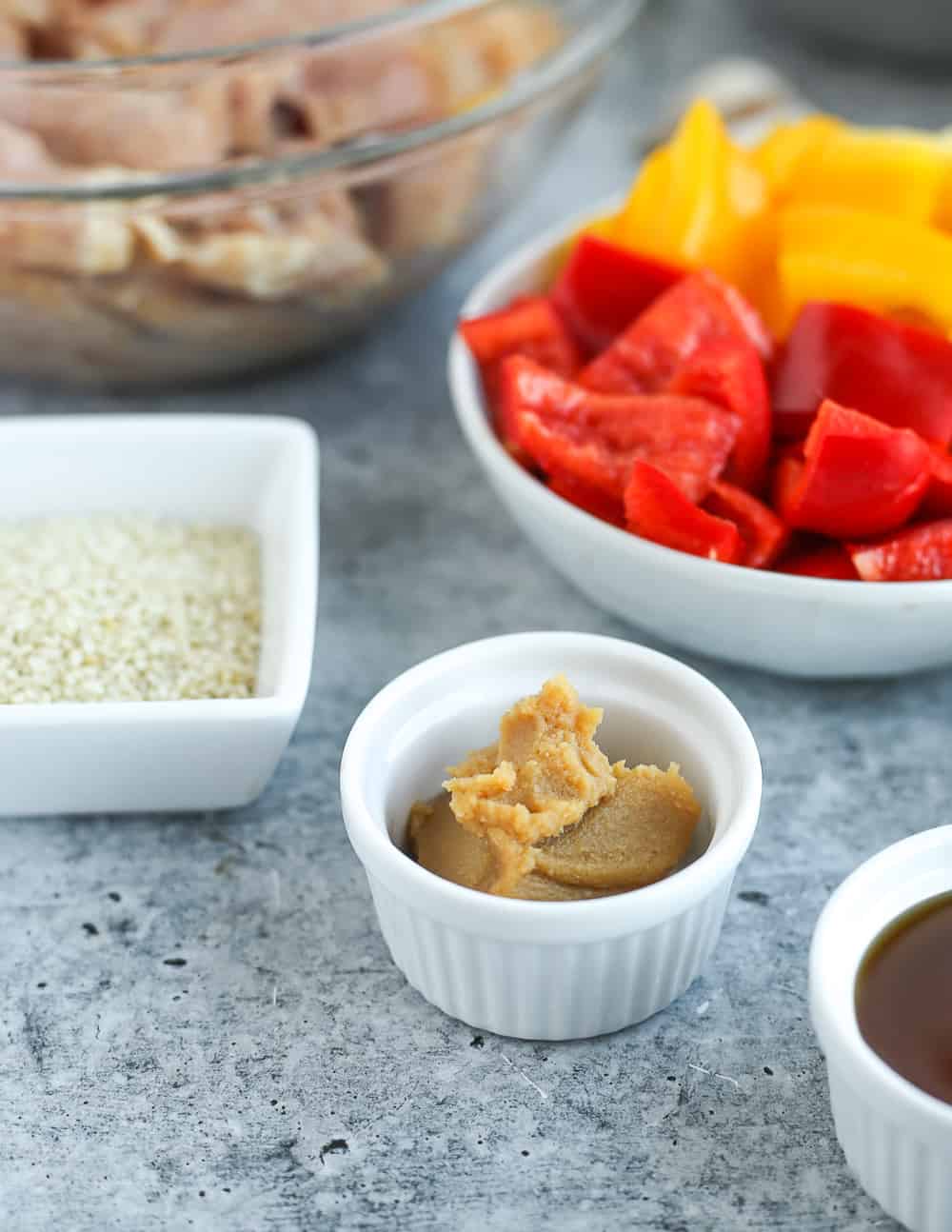
The color difference is due to the length of fermentation and other ingredients (which may include barley, rice, or buckwheat). I enjoy both flavors, but there is a difference if you taste them side by side. Either option can be used in a miso stir fry. You can find it in the refrigerated section of an Asian market or the health section of some grocery stores.
I think it’s a great flavor pairing for pork dishes, especially this pork tenderloin stir fry recipe. When you slice the pork tenderloin into thin strips, you increase the surface area so the marinade can infuse into the pork. The end result is a savory dish that complements the other flavors of the vegetables and garnishes. Make sure to marinate for at least four hours.
I think it’s a great flavor pairing for pork dishes, especially this pork tenderloin stir fry recipe. When you slice the pork tenderloin into thin strips, you increase the surface area so the marinade can infuse into the pork. The end result is a savory dish that complements the other flavors of the vegetables and garnishes. Make sure to marinate for at least four hours.
Experimenting with flavor pairings can be another unique, indirect way of supporting healthy habits. I think this is especially true if you’re the kind of person who likes to try new recipes or ingredients. You can build your confidence in the kitchen and get familiar with different cooking methods. All of this, over time, builds sustainable habits like cooking meals at home, planning meals in advance, or adding more variety to your meals.
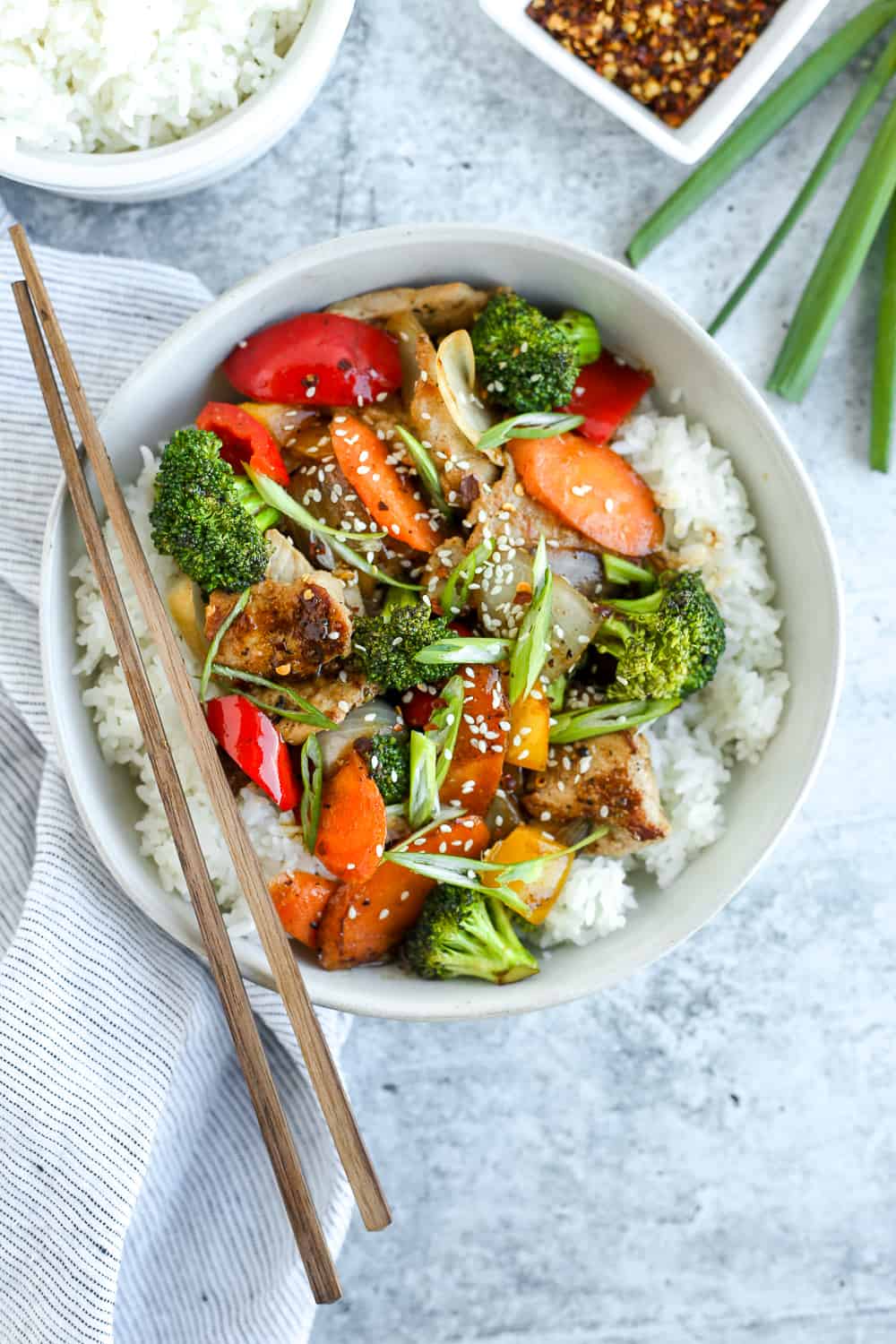
How to make Sweet Miso Pork Stir Fry
The first step for this miso stir fry recipe is to make the marinade/sauce. I love when you can make something once and use it for multiple things. However, you’ll want to make sure not to mix the marinade from the pork tenderloin with what you use for the sauce – that’s a big cross-contamination mistake.
Street Smart Nutrition Tip: To read more about food safety and cooking with pork, check out this resource on endpoint cooking temperatures.
Use a sharp knife to cut your pork tenderloin into thin strips. Add them to a mixing bowl, then cover and coat with the marinade. Seal the top and let it marinate in the fridge for at least four hours. If you can do it for longer, great! Sometimes I even prep this step the night before for maximum flavor.
When you’re ready to cook, prep your veggies and heat your skillet. The key to a good pork stir fry is high heat. The thin strips will cook very quickly, needing only a few minutes on each side. It is a misconception that pork must be cooked until juices run clear and the meat is white. This is false! With modern pork production practices, commercial retail pork is safe when cooked to an internal temperature of 145⁰F, which will be a light blush pink color. You’ll be able to see that since you aren’t adding the sauce until the end of cooking.
When you’re ready to cook, prep your veggies and heat your skillet. The key to a good pork stir fry is high heat. The thin strips will cook very quickly, needing only a few minutes on each side. It is a misconception that pork must be cooked until juices run clear and the meat is white. This is false! With modern pork production practices, commercial retail pork is safe when cooked to an internal temperature of 145⁰F, which will be a light blush pink color. You’ll be able to see that since you aren’t adding the sauce until the end of cooking.
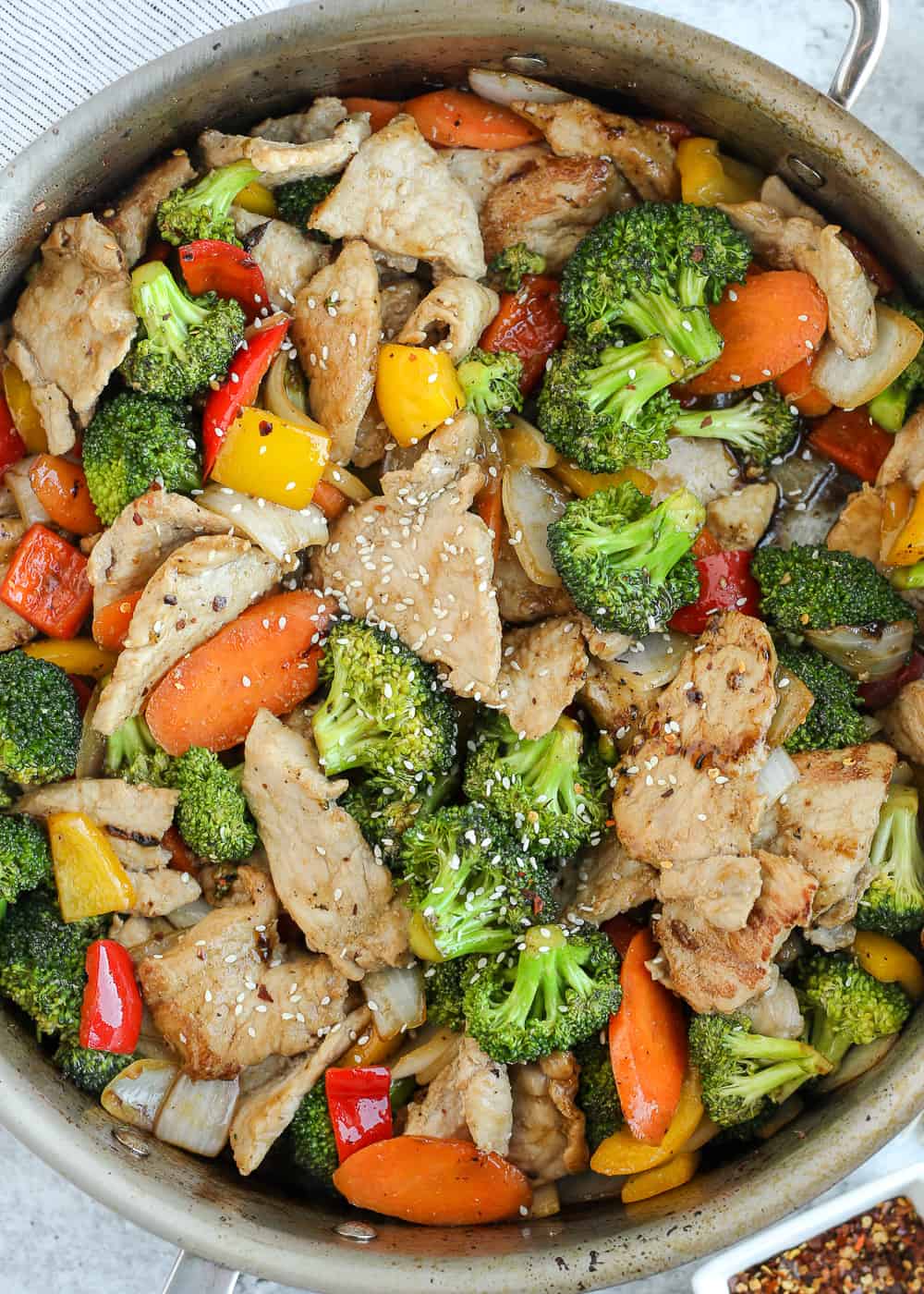
The other key to a good stir fry is to not overcrowd your pan. Transfer the cooked pork to a clean mixing bowl and allow it to rest while you cook the veggies. Once they’re ready, add the pork back in and pour in the sauce. Stir until everything is combined, then garnish and serve with rice!
Ingredients
Sauce and Marinade
- 2/3 cup toasted sesame oil
- 1/4 cup low-sodium soy sauce
- 3 tbsp honey
- 2 1/2 tbsp white miso paste
- 2 1/2 tbsp rice wine vinegar
- 4 cloves garlic, minced
- 1/2 tbsp red pepper flakes
- 1-2 tbsp cornstarch, for sauce only
Pork Stir Fry
- 1 1/4 lb pork tenderloin
- 3 tbsp canola or cooking oil
- 3 cups broccoli florets
- 1 1/2 cups chopped bell peppers
- 1 cup carrots, thinly sliced on an angle
- 1 medium yellow or white onion, chopped, about 1 1/4 cups
- 2 medium green onions, thinly sliced on an angle, for garnish
- sesame seeds, for garnish, optional
- red pepper flakes, for garnish, optional
- cooked rice, for serving
Instructions
For the Sauce and Marinade
Whisk all ingredients except the cornstarch together in a small bowl or measuring cup. Divide in half, reserving one half for the sauce in a sealed container in the fridge until ready to use. Pour the remaining half over the sliced pork tenderloin and cover. Marinate for at least four hours, or overnight.
For the Pork Stir Fry
- Slice the pork tenderloin into very thin strips. Add to a mixing bowl and coat with the marinade. Cover and chill for at least four hours.
- In the meantime, prepare the vegetables by chopping them into similarly sized pieces. Set aside. Add the cornstarch to the sauce mixture for thickening.
- Heat half of the canola or cooking oil in a large skillet over high heat. Once the oil is glistening, add the marinated pork tenderloin. Arrange in a single layer and cook for about 2 minutes, or until the pork develops sear marks. Flip and repeat, cooking an additional 3 to 4 minutes or until the pork is fully cooked. Transfer to a clean mixing bowl and hold warm.
- Add the remaining canola or cooking oil to the skillet. Add the broccoli florets and cook on high heat, stirring occasionally, for two minutes. Add the carrots and onions, then cook for another 2-3 minutes. Finally, add the bell peppers and cook until the veggies reach your desired tenderness, about 6 to 8 minutes total.
- Add the cooked pork back into the skillet, then top with the prepared sauce. As the sauce heats, it should thicken slightly. Once heated through, remove from heat and serve over rice. Garnish with sliced green onions, sesame seeds, and red pepper flakes if desired.
Notes
I recommend slightly undercooking your vegetables, as there will be residual heat that continues to cook them even after removed from heat. This will help you avoid overcooked or soggy vegetables.
